
Tufnol Laminates Spider Diagram
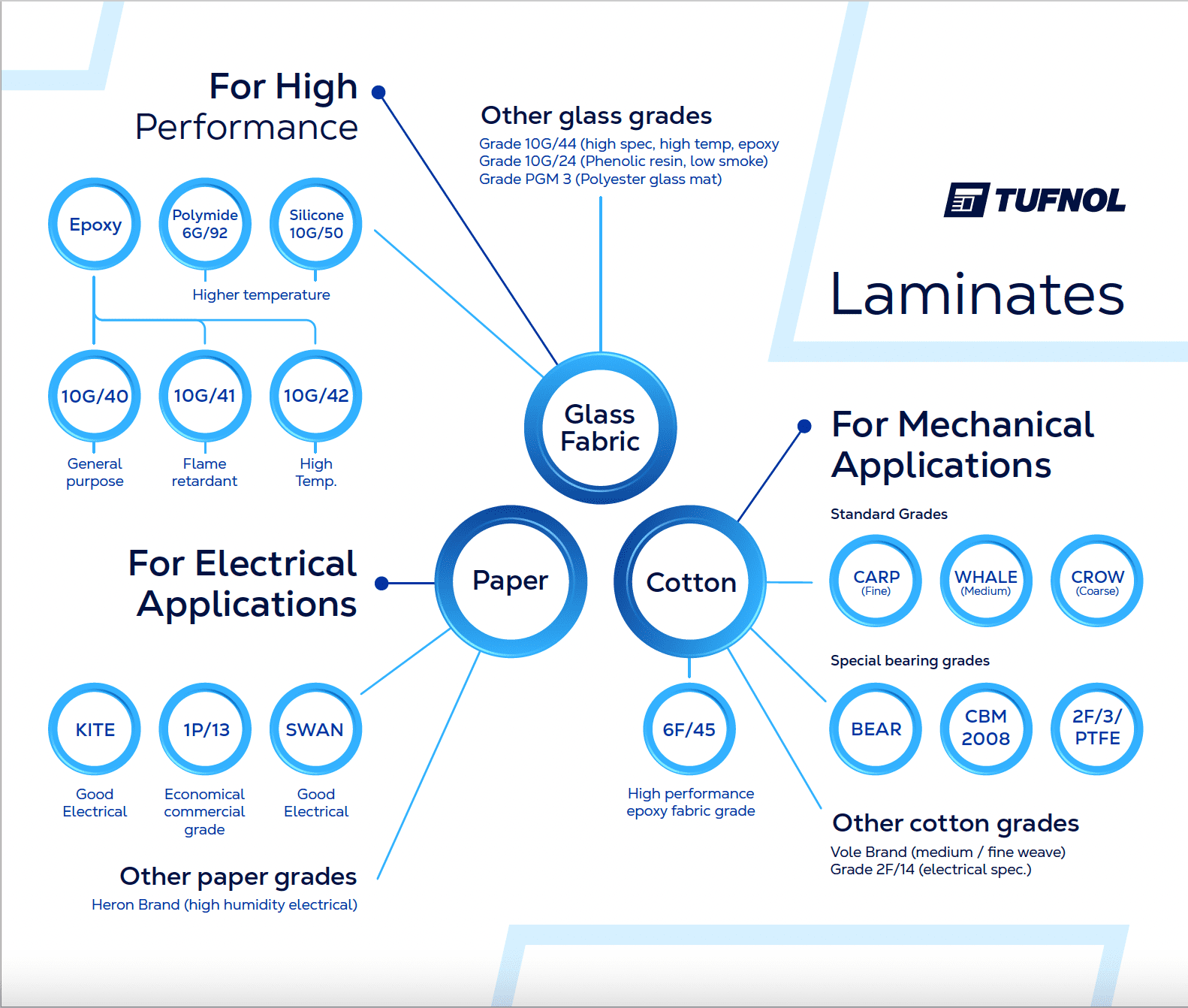
Tufnol Laminate Material Structure by Performance and Application
This diagram categorises Tufnol laminates according to reinforcement material and functional performance, helping engineers understand how different grade families are typically used.
Glass fabric laminates sit at the high-performance end of the range. These grades are engineered for elevated temperatures, dimensional stability and demanding operating conditions. Epoxy, silicone and polyimide resin systems provide options for general-purpose use, flame retardancy and sustained high-temperature performance. Additional specialist glass grades support low-smoke and high-specification applications.
Paper-based laminates are primarily selected for electrical insulation duties. These grades balance electrical properties, machinability and commercial efficiency, covering economical electrical laminates as well as options suited to higher humidity or more demanding service conditions.
Cotton fabric laminates are commonly specified for mechanical applications where strength, wear resistance and machining performance are critical. Fine, medium and coarse weave grades support a wide range of engineering components, with specialist bearing and PTFE-enhanced options available for reduced friction and extended service life.
By structuring laminate grades around material type and application focus, the diagram provides a clear, specification-led view of the Tufnol laminate portfolio without relying on individual product pages, making it a useful reference point during early-stage material selection.